
Chapel on the Lusebrink
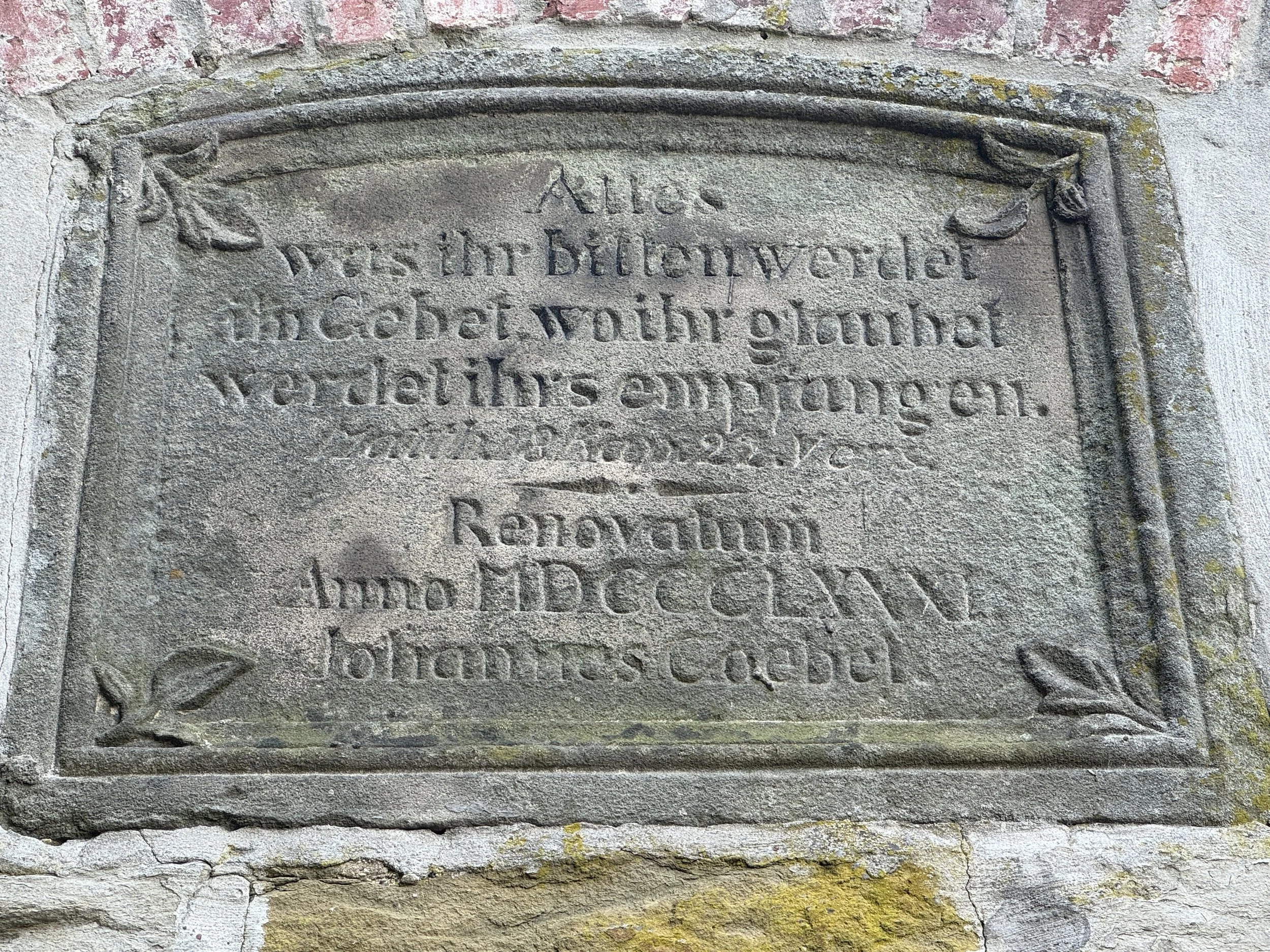
Everything, whatever you ask for in prayer, where you believe you will receive it
Renovated in 1881
Johannes Goebel
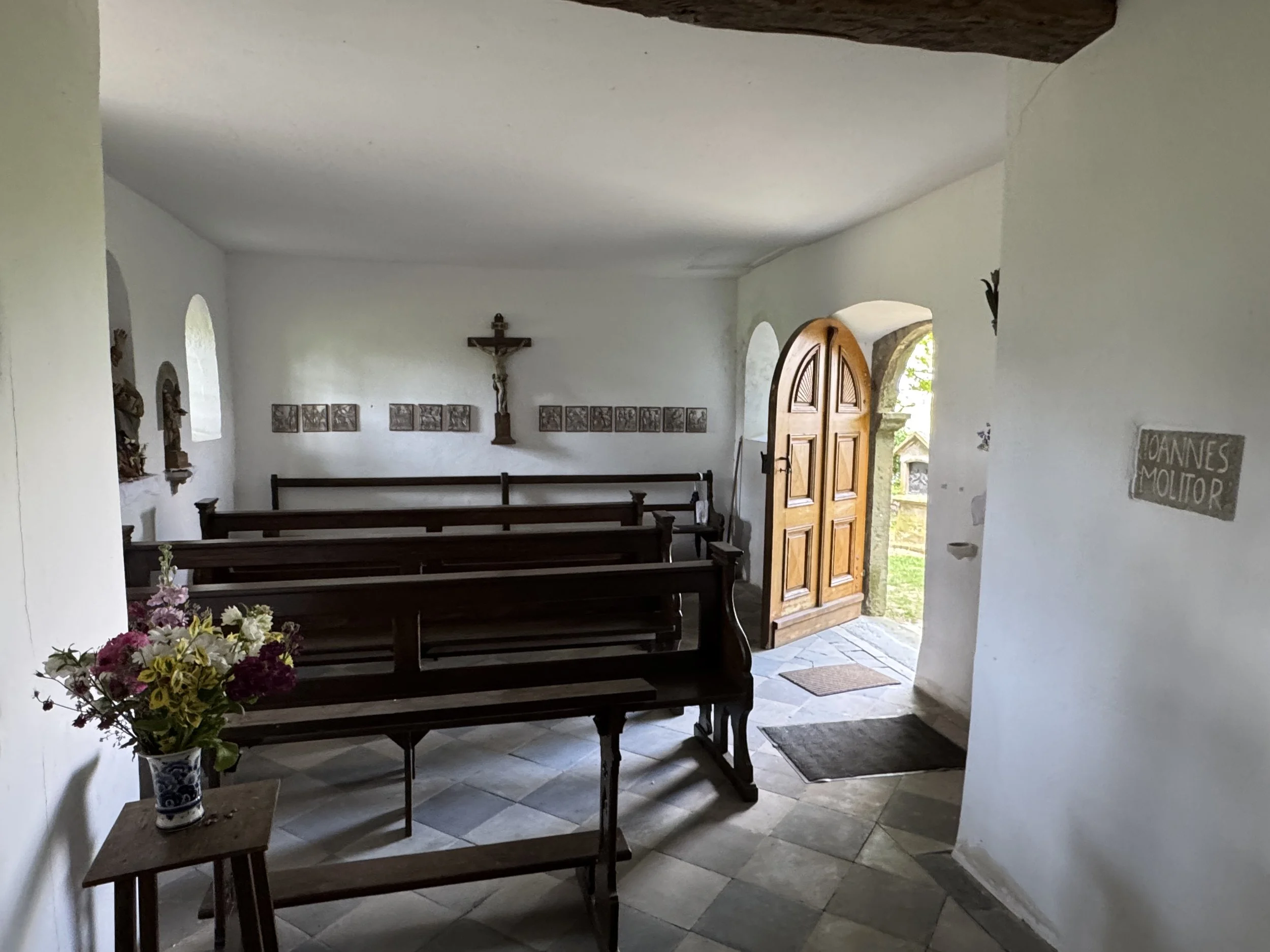
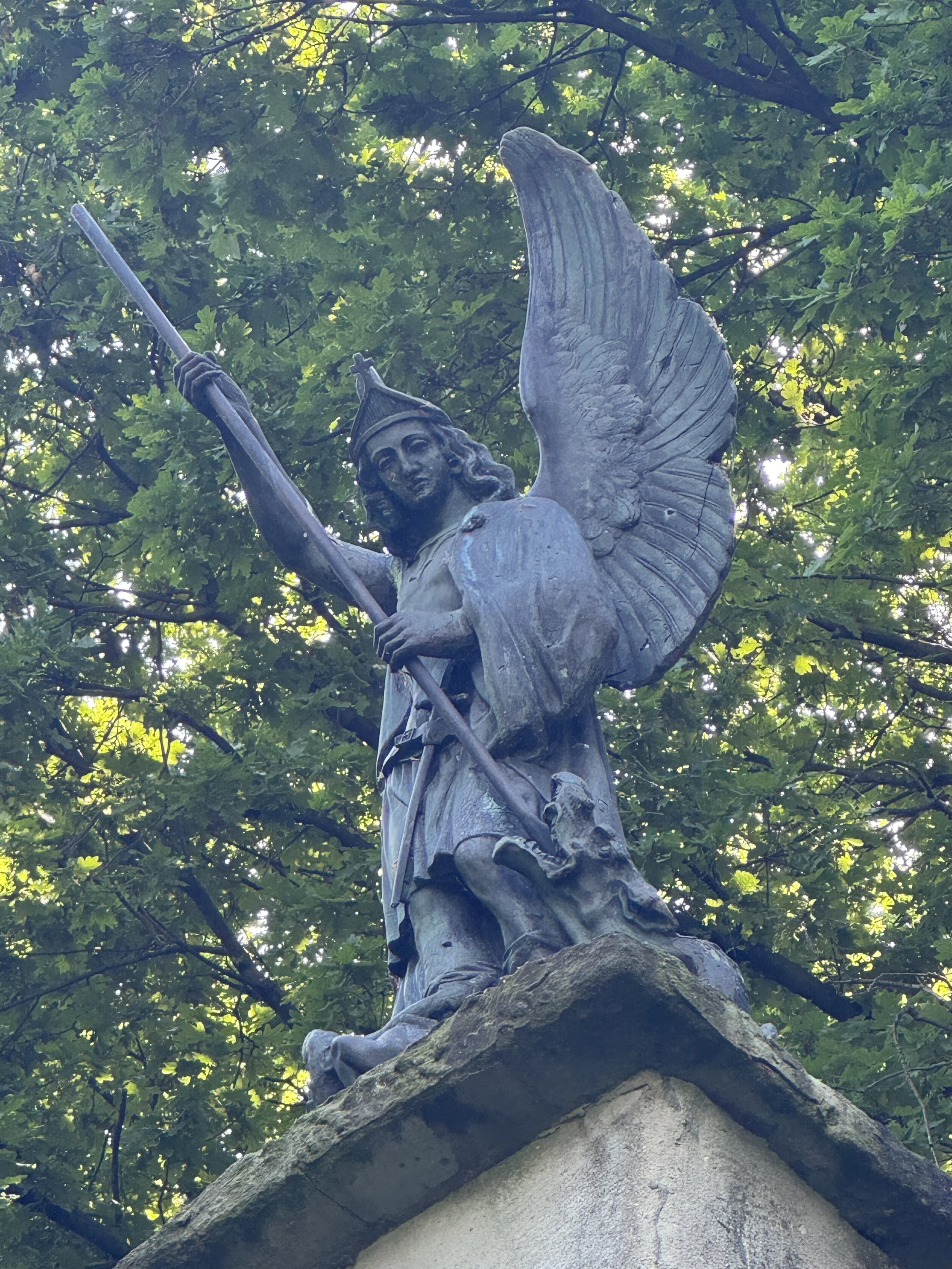
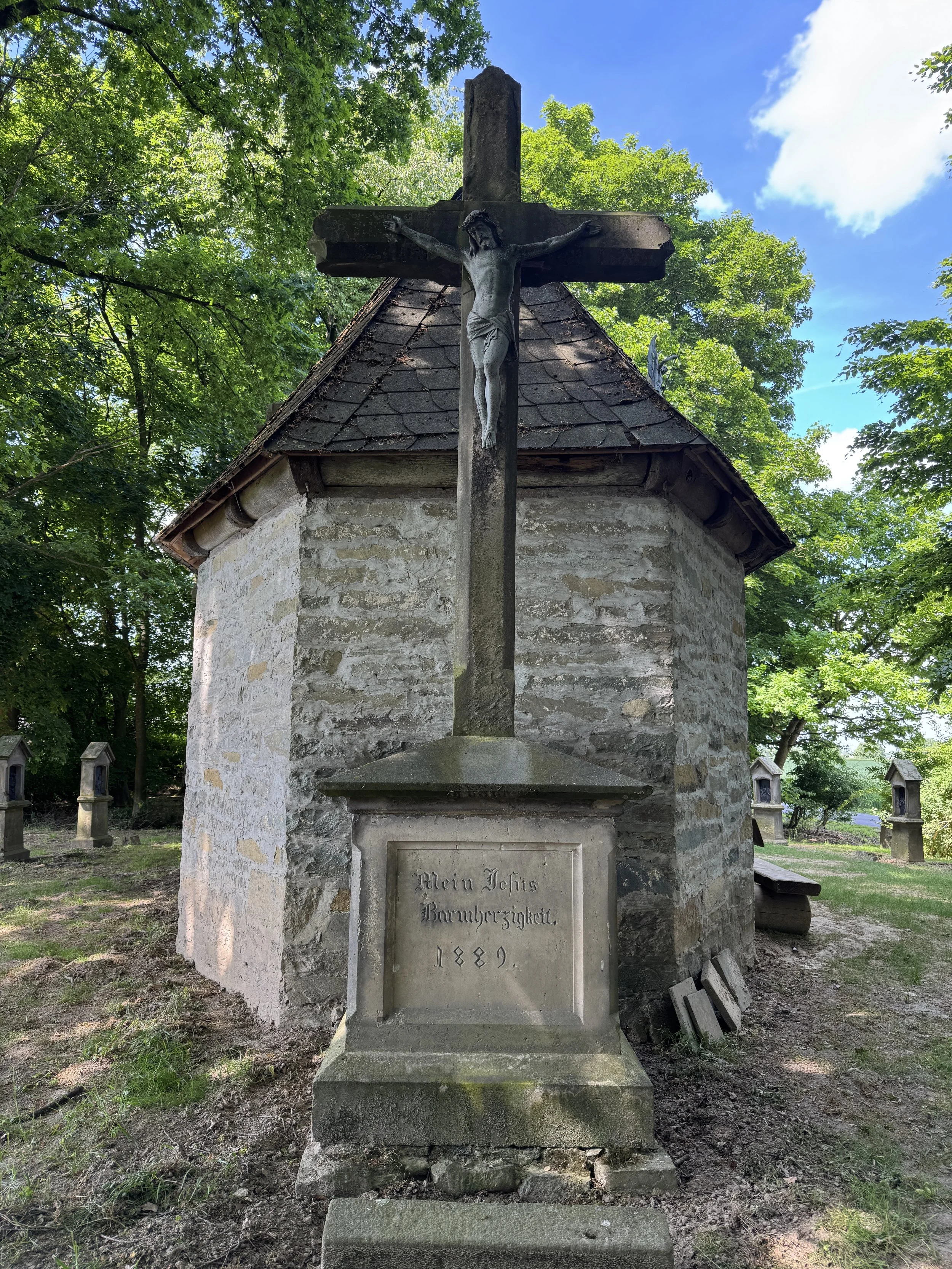
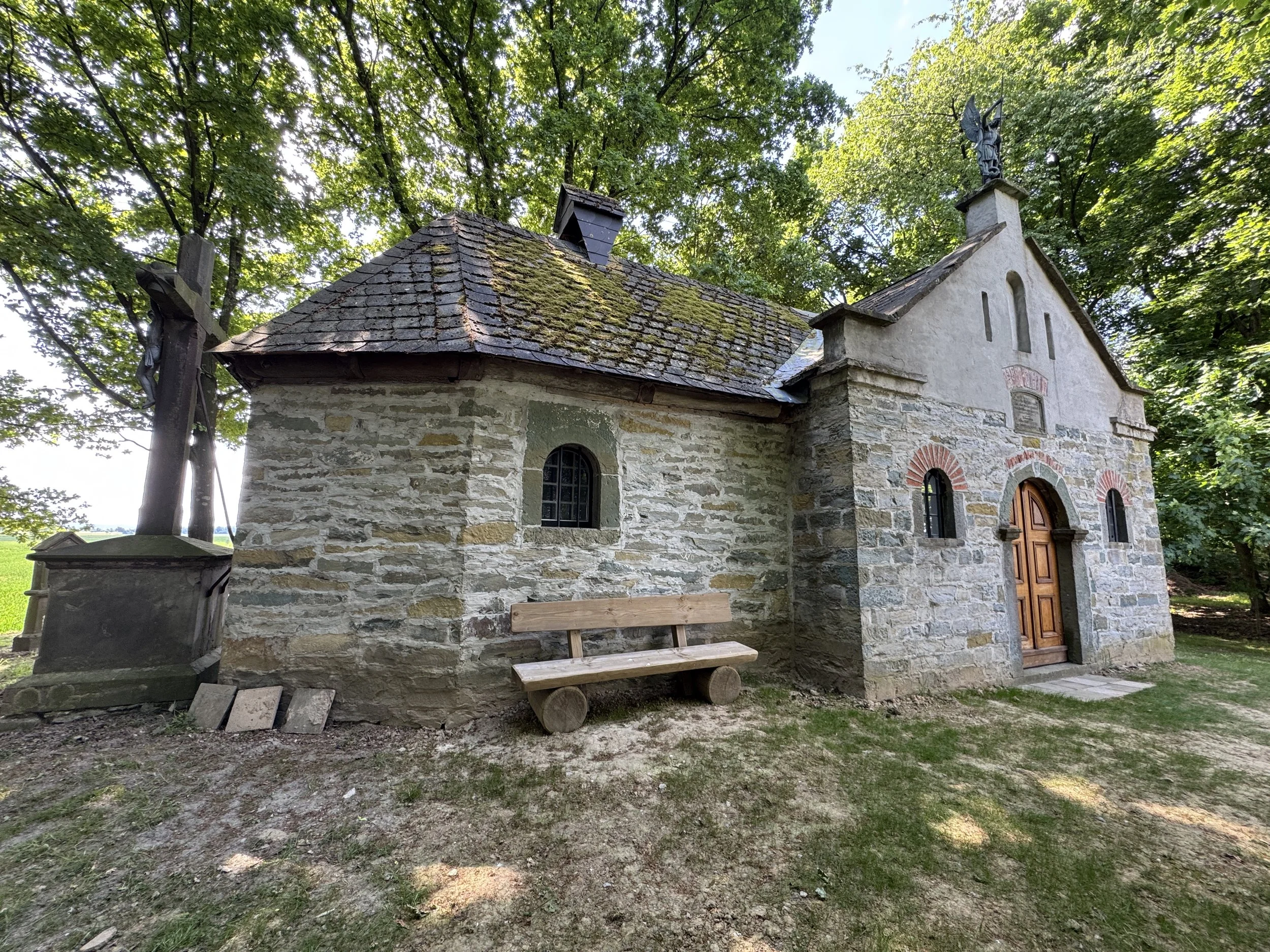
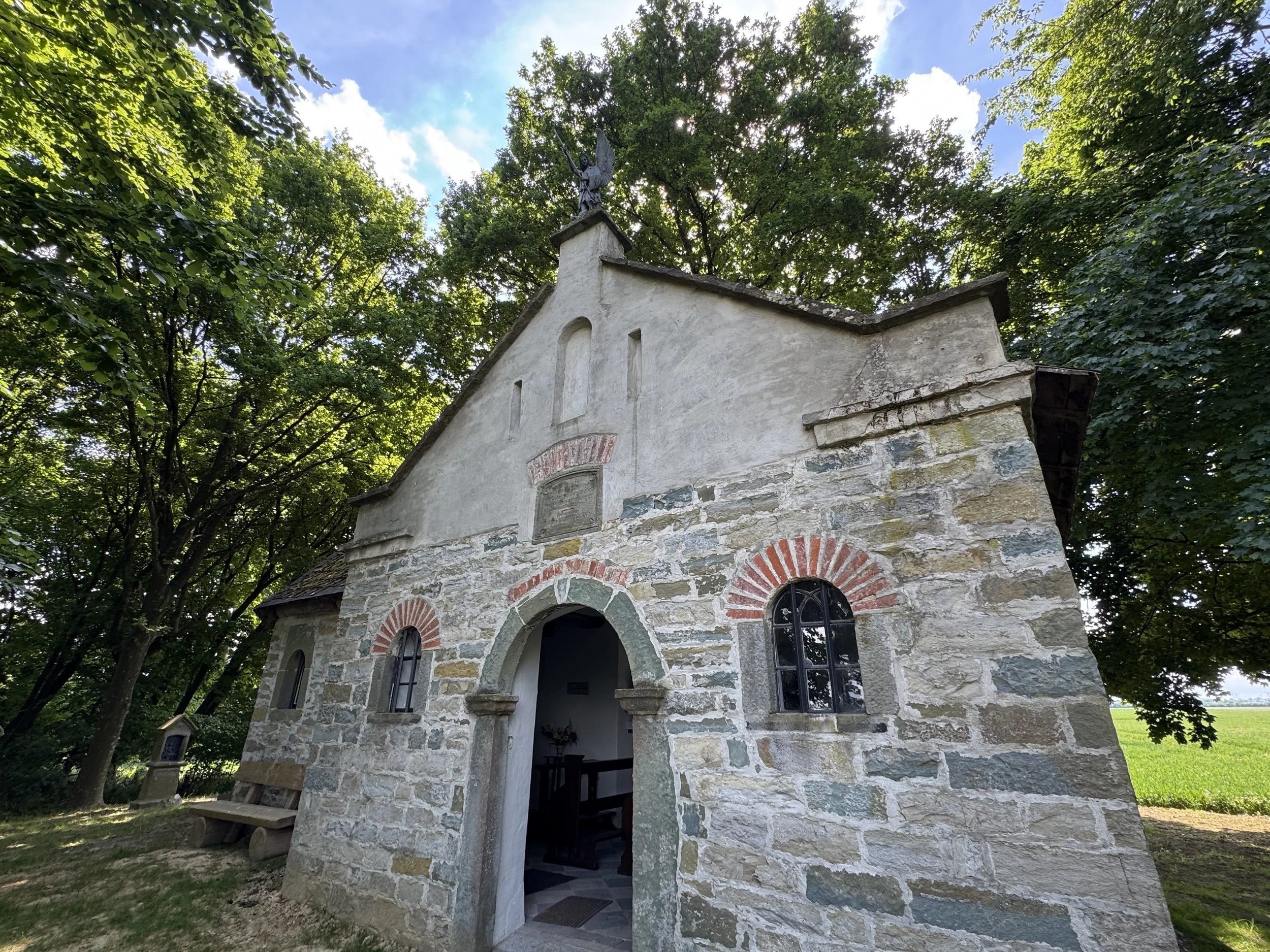
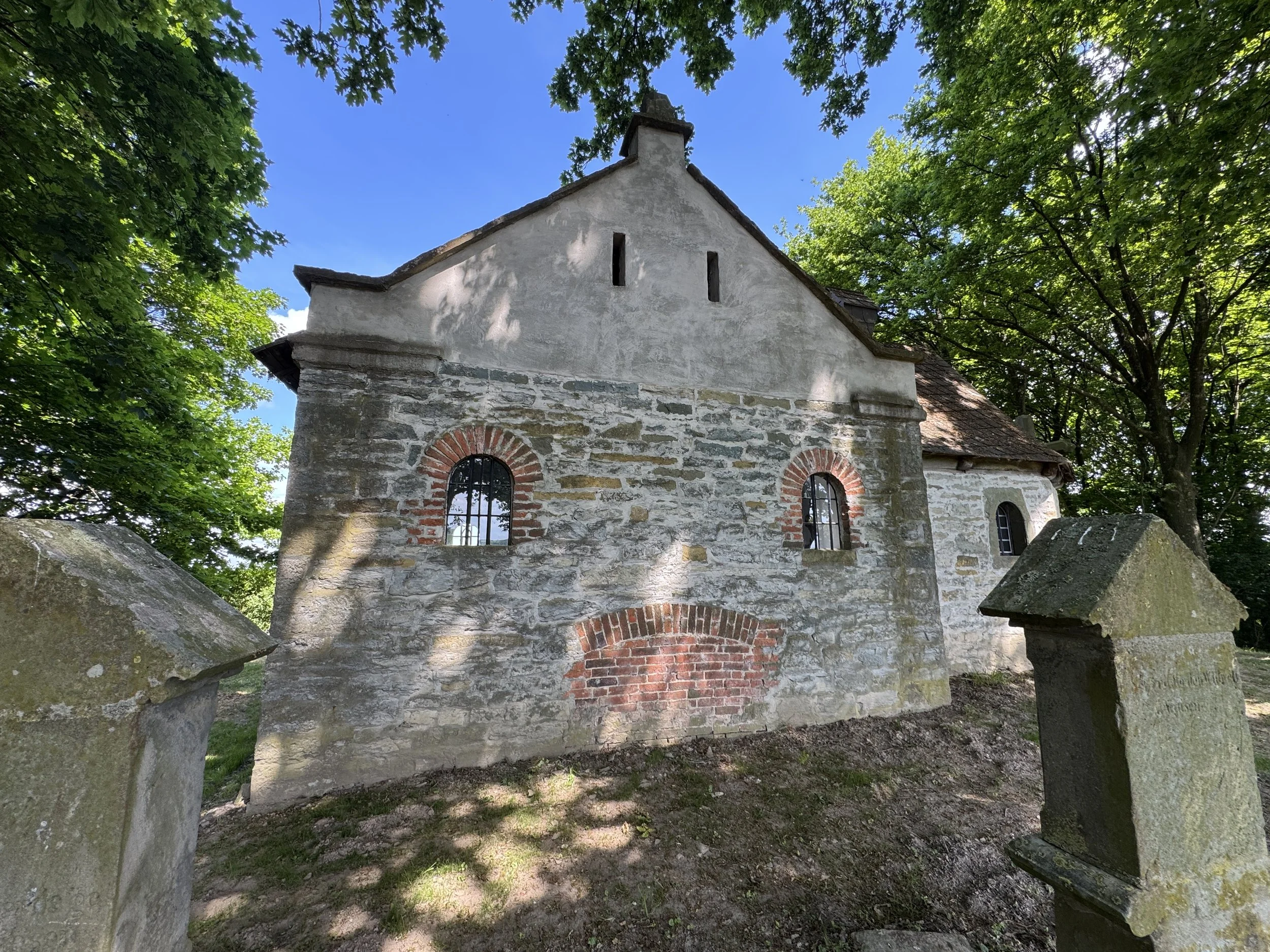
Near the village of Schmerlecke along the old hellweg, now part of the way of St. James, you'll find an unassuming metal gate. Upon closer approach, surrounded by a small grove and grain fields, you'll discover an old stone chapel. This is the chapel on the Lusebrink.
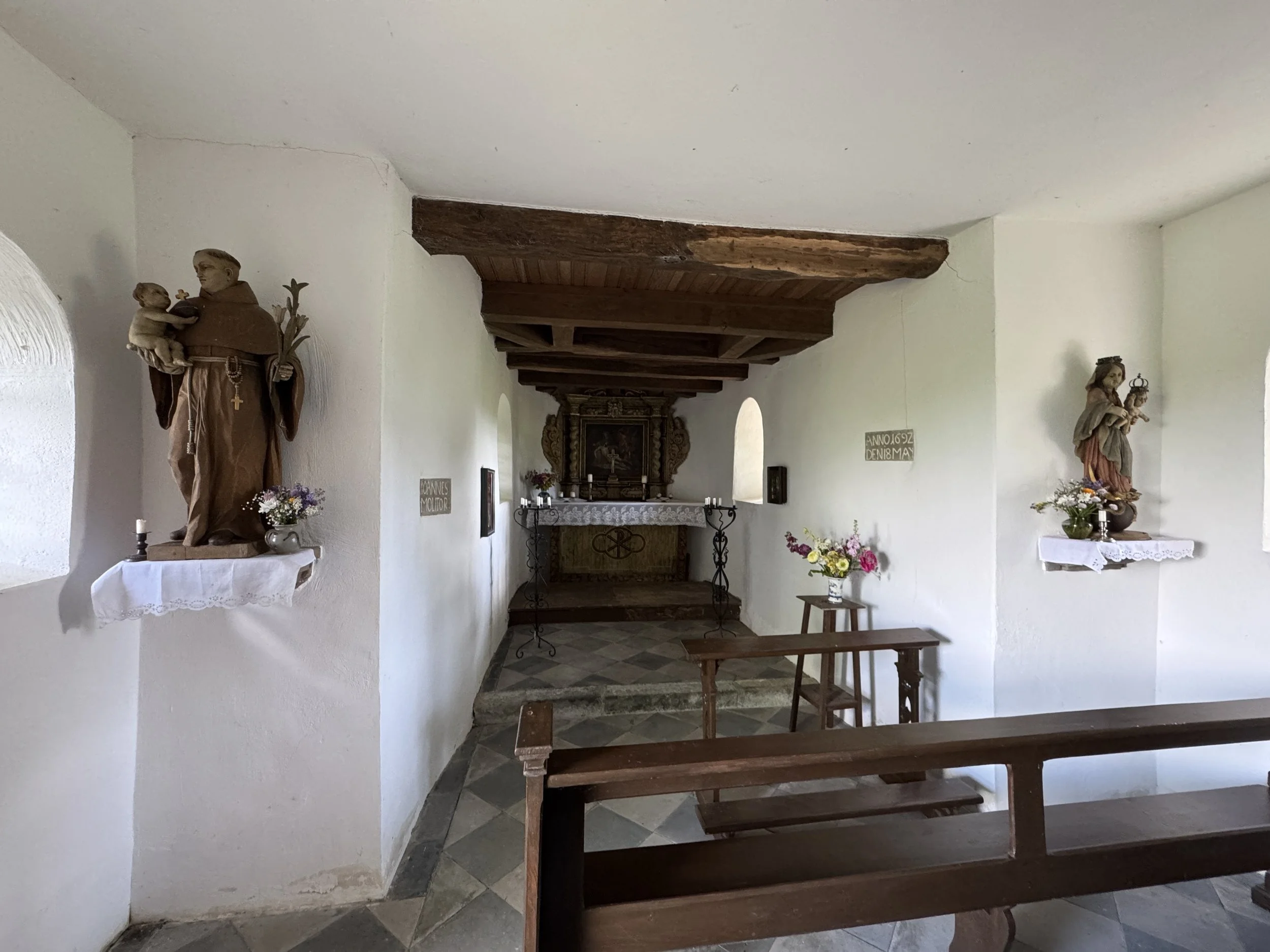
Historical records reveal that around 1657, a wealthy Dutch family named Möller, latinized as Molitor, settled in Horn. One of his sons, Johannes Molitor, became Vicar in Horn, and he rebuilt the chapel, which had been destroyed during the 30 years war. According to the inscription, it was consecrated on the 18th of May 1697.
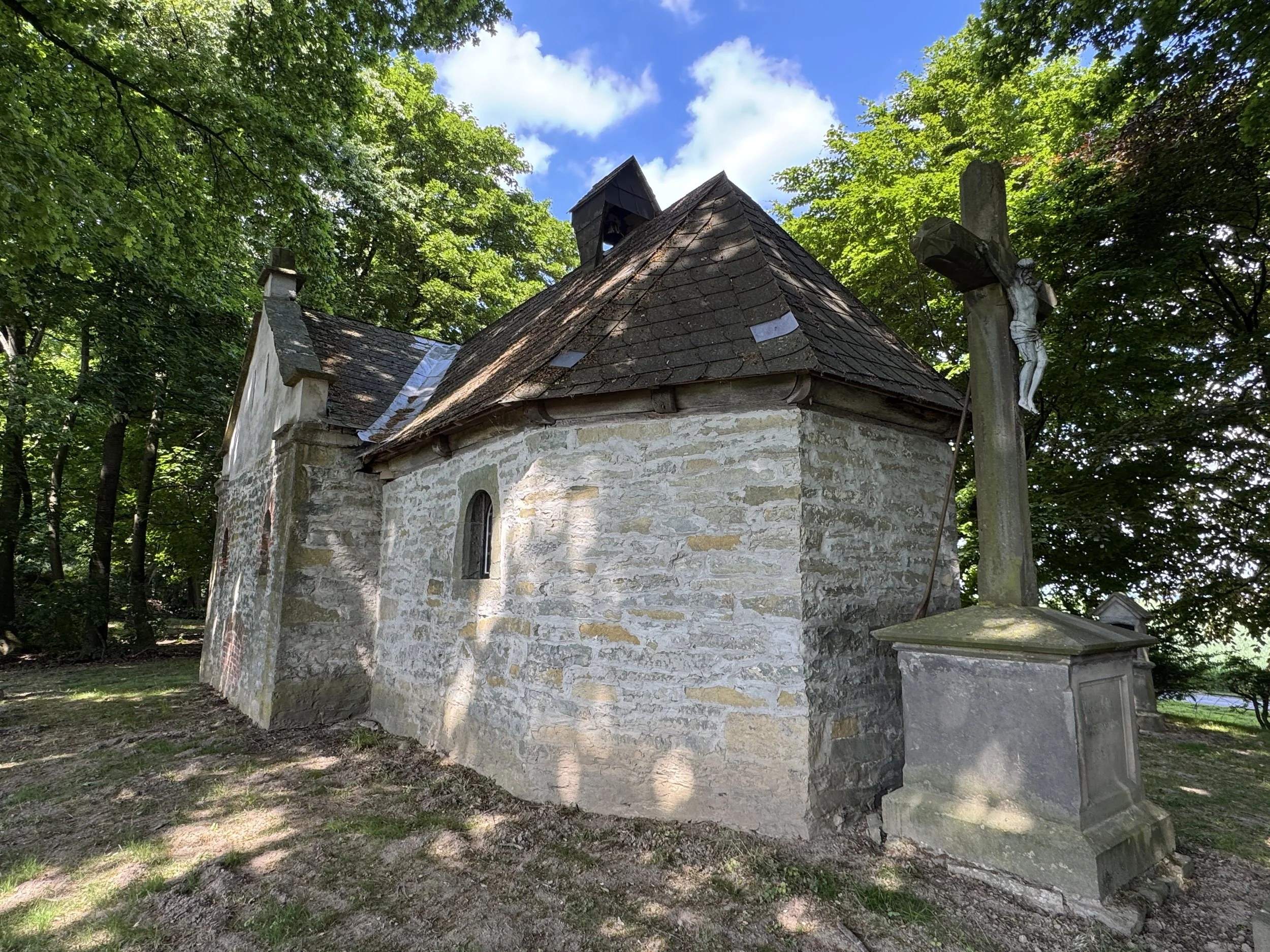
The Molitor family sold their farm to the Felscher family in 1732. At some point, the chapel was detached from the property and sold to Johannes Gobel, a merchant from Horn. Gobel expanded the chapel in 1881, adding the large stone crucifix in 1889 and over time created the way of the cross. Each of the 14 stations were donated by individual families throughout the parish.
After several generations in the possession of the Gobel family, it was sold to Franz Bals, owner of the neighboring LuseBrink farm. When acquired in the early 1950s, the building was in a state of disrepair as sections of the roof had collapsed. The Bals family restored the chapel, and to this day, it remains under their vigilant stewardship.
20 May 2025
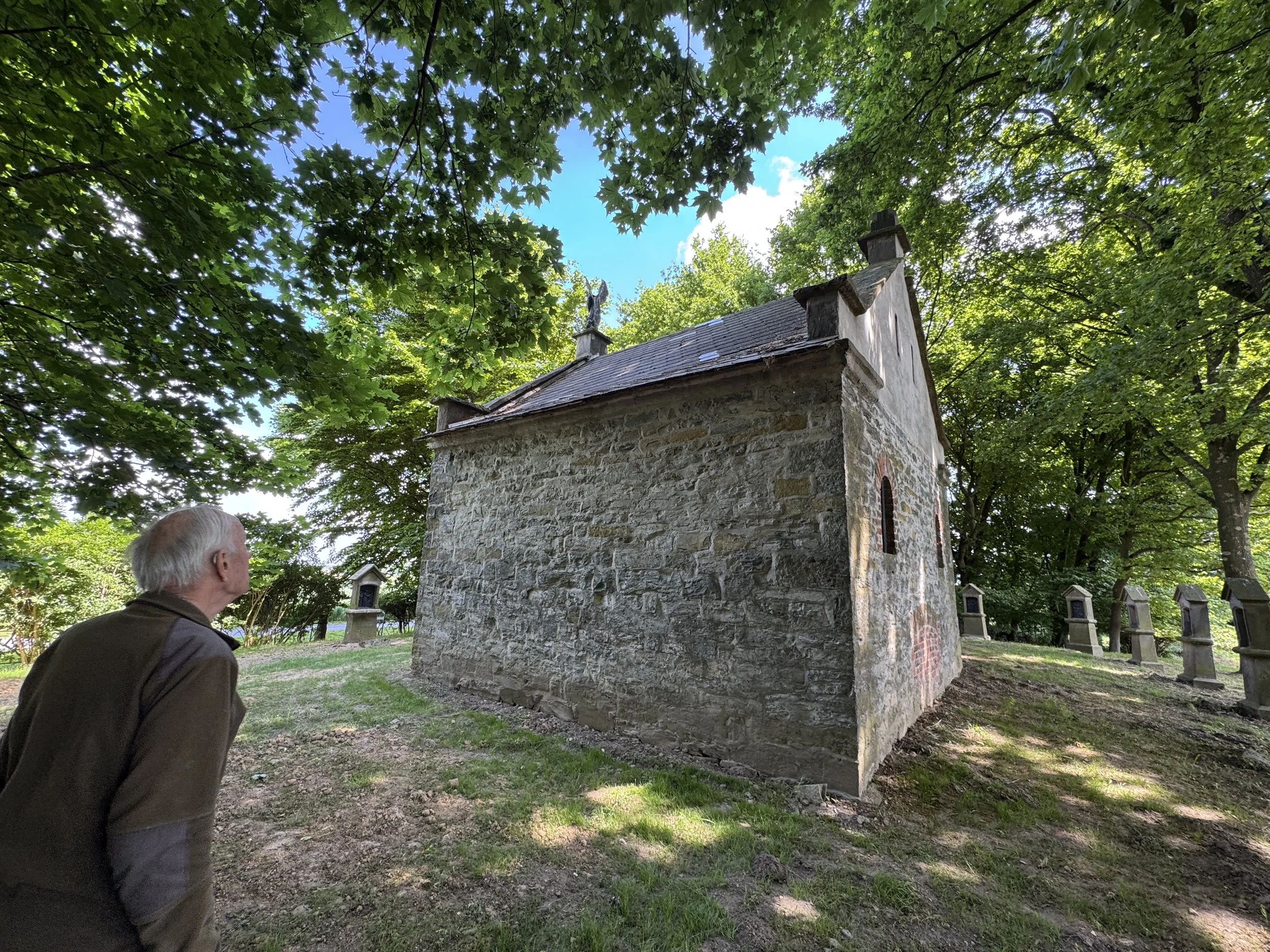
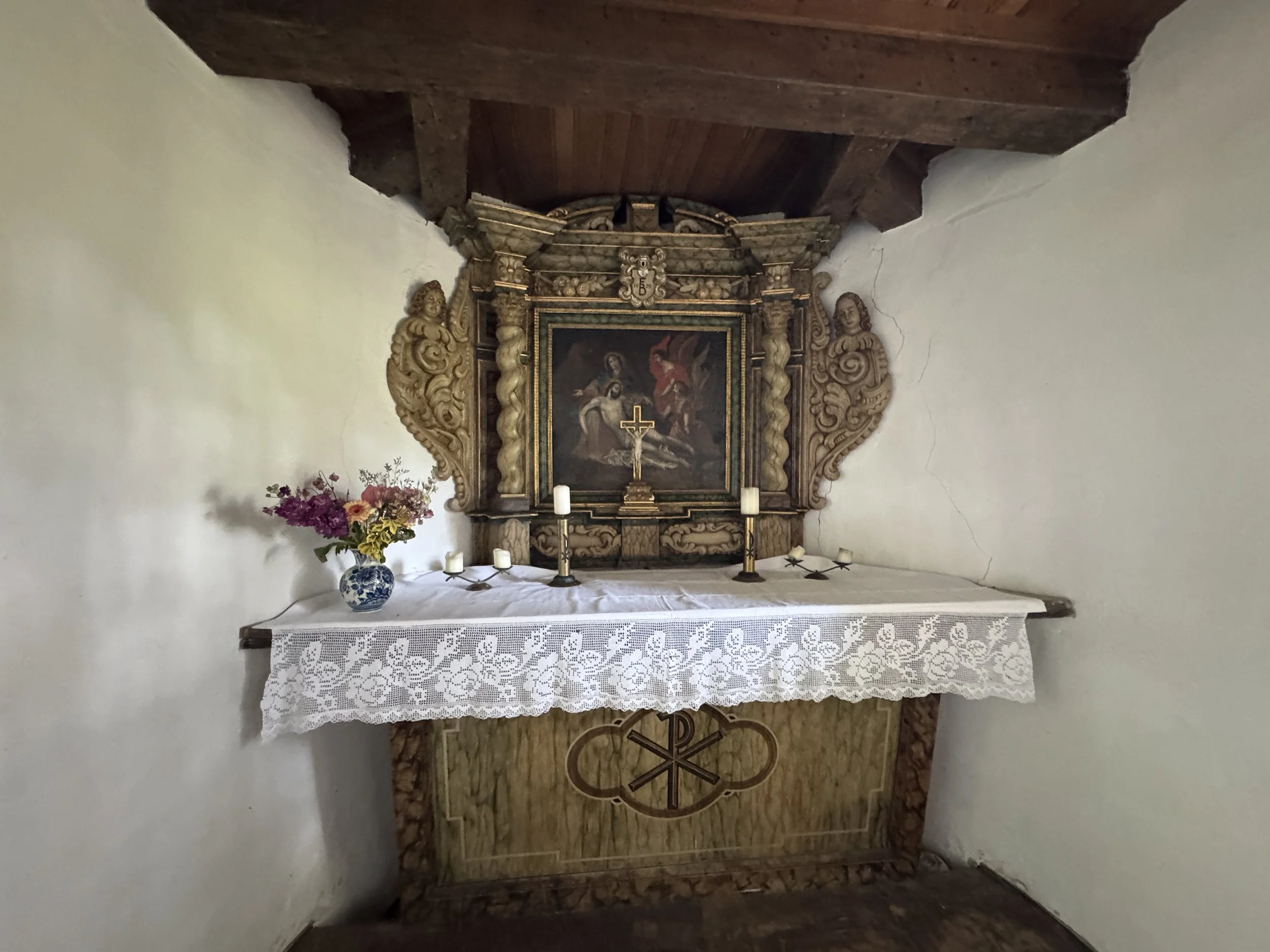
During our visit to the Bals-Lusebrink, Franz Josef gave Shannon and I a guided tour of the chapel and allowed me to take pictures. The location of the chapel is said to have a strong and direct connection to heaven/God and has been considered a holy place prior to Christianity as it’s believed to have been a site of pagan cult worship. I’m not a religious person, but I definitely felt that the grounds had a palpable tranquility.
Franz Josef’s father, Franz Bals, acquired the land/chapel and restored it in 1954. Franz Josef recalled several that sections of the roof had fallen in, so his father made him help with the replacement of beams as necessary, as well as applying a new roof. He also recalled an era when kids from the village made a habit of pushing over the Stations of the Cross, which is why several have noticeable mortar repair and/or missing chunks. In past centuries, people would leave offerings for protection, prosperity, healing, etc; but most were looted during times of war. Franz Josef told me he’s looked all around, including within the roof, but never found the gold. He has fascinating stories and great sense of humor.
Although people only come to pray twice per year, Franz Josef and Heidi keep the Chapel immaculately maintained and stocked with fresh flowers. If you are in Schmerlecke, I deem it a must-see location.
Stations of the Cross
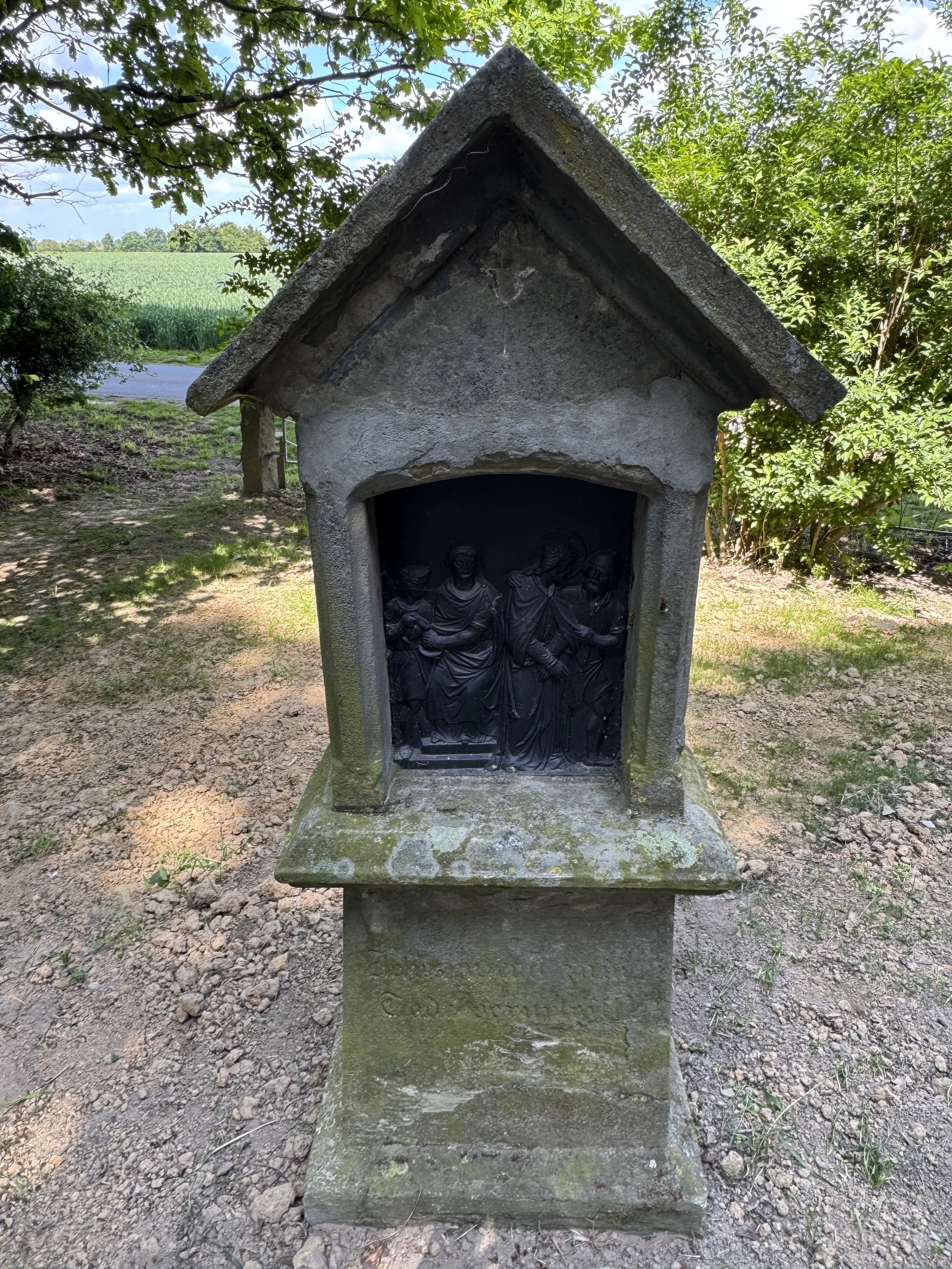
I - Jesus is condemned to death
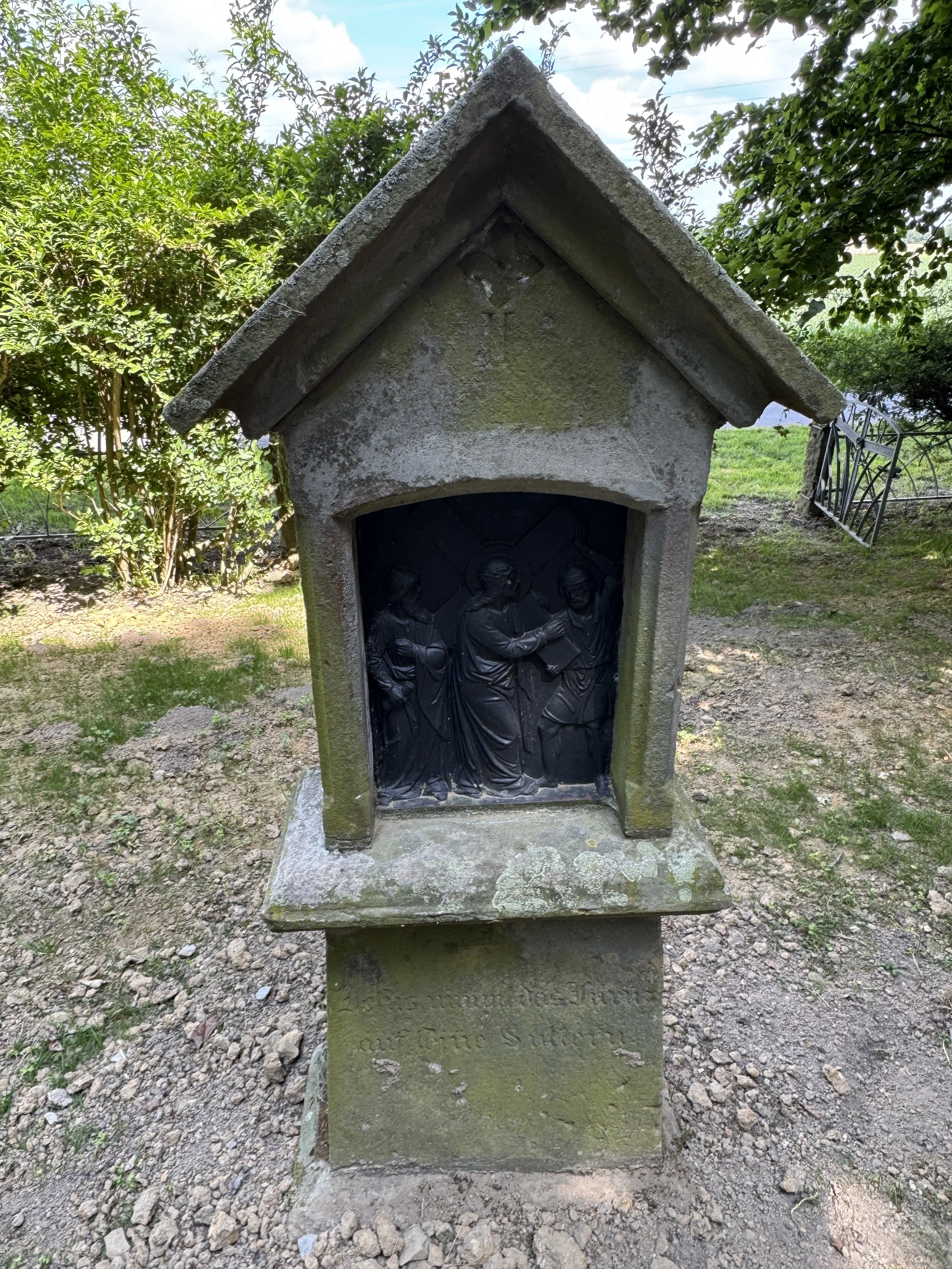
II - Jesus takes up his Cross
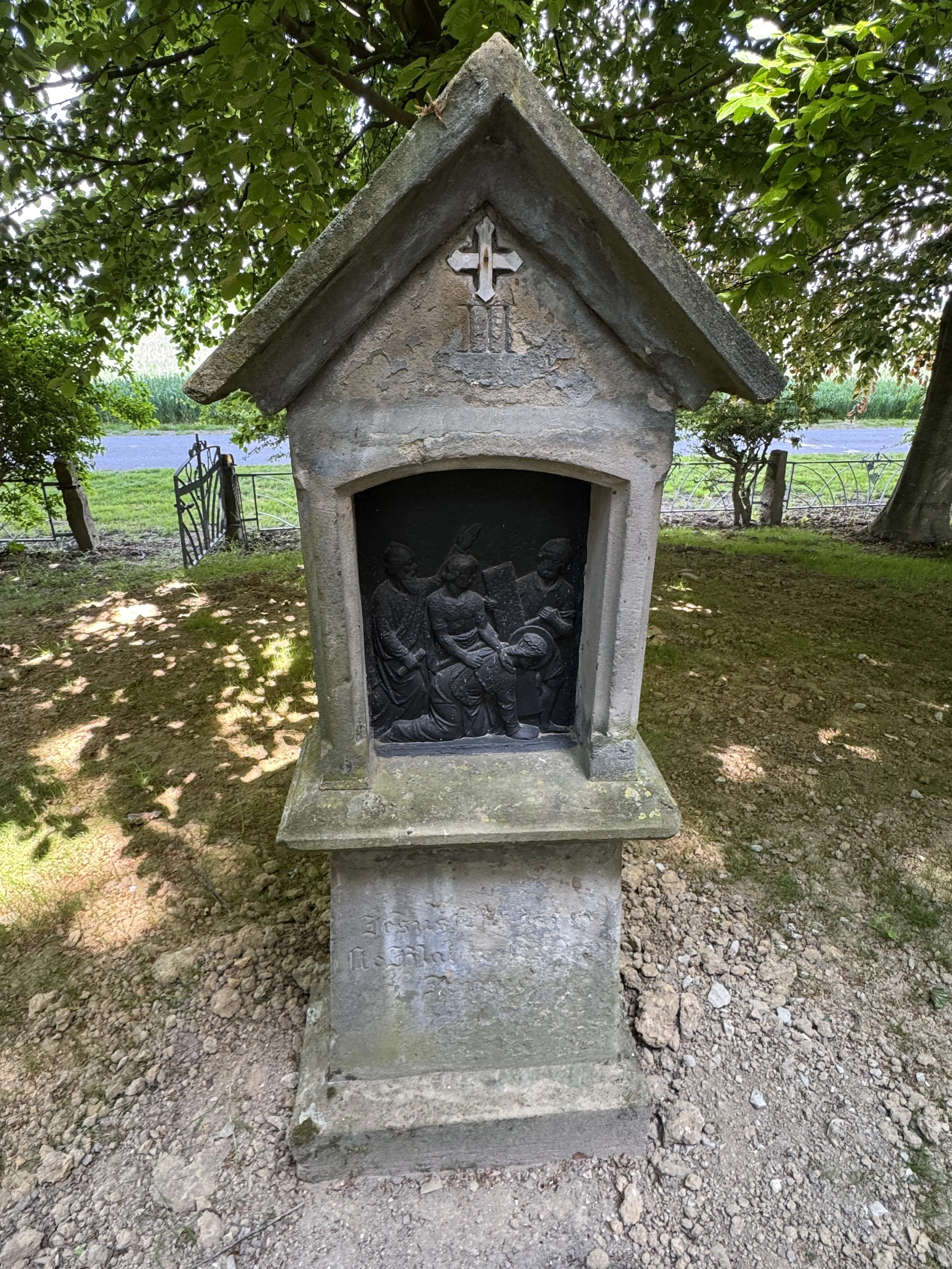
III - Jesus falls the first time
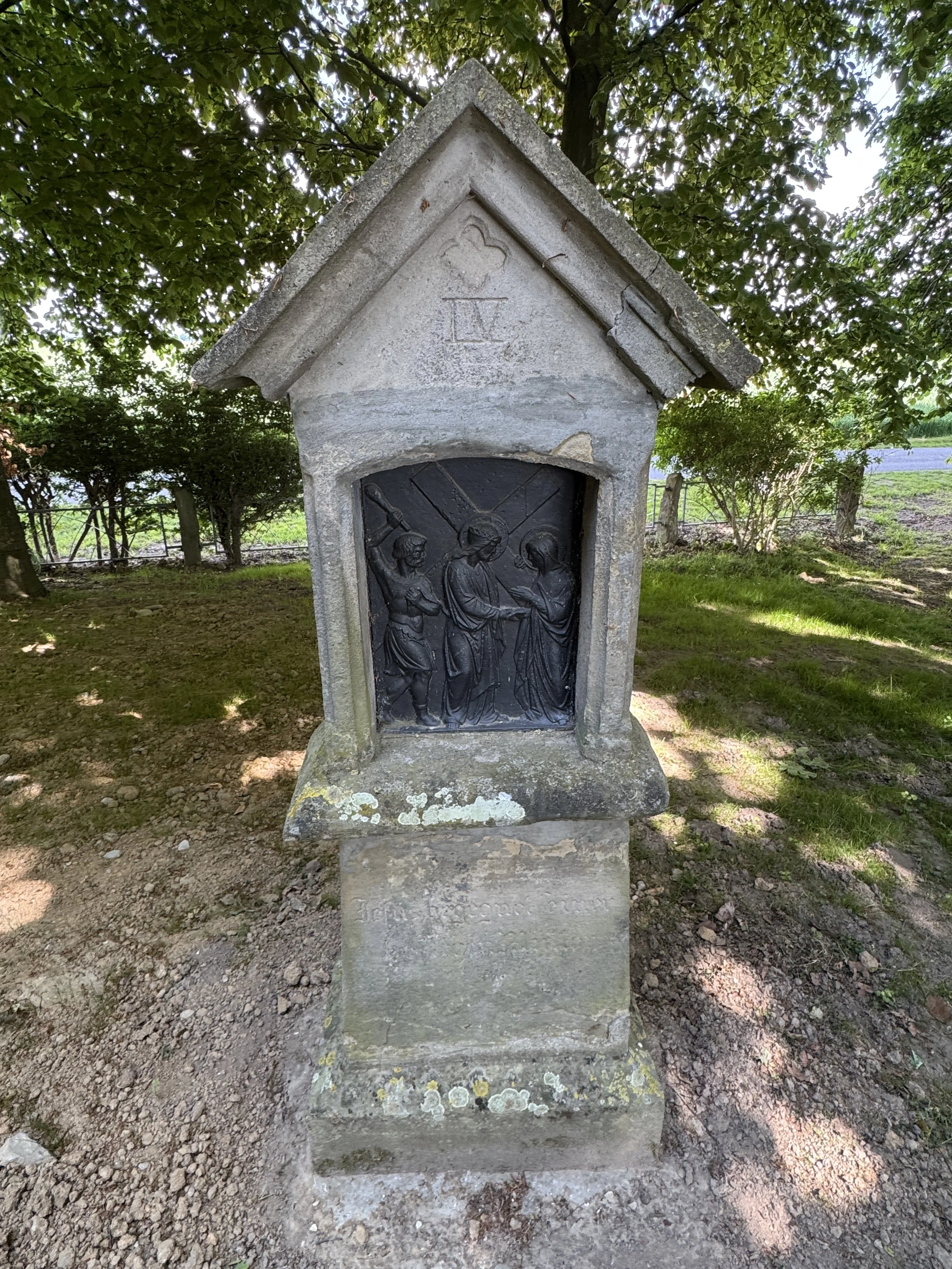
IV - Jesus meets his Mother
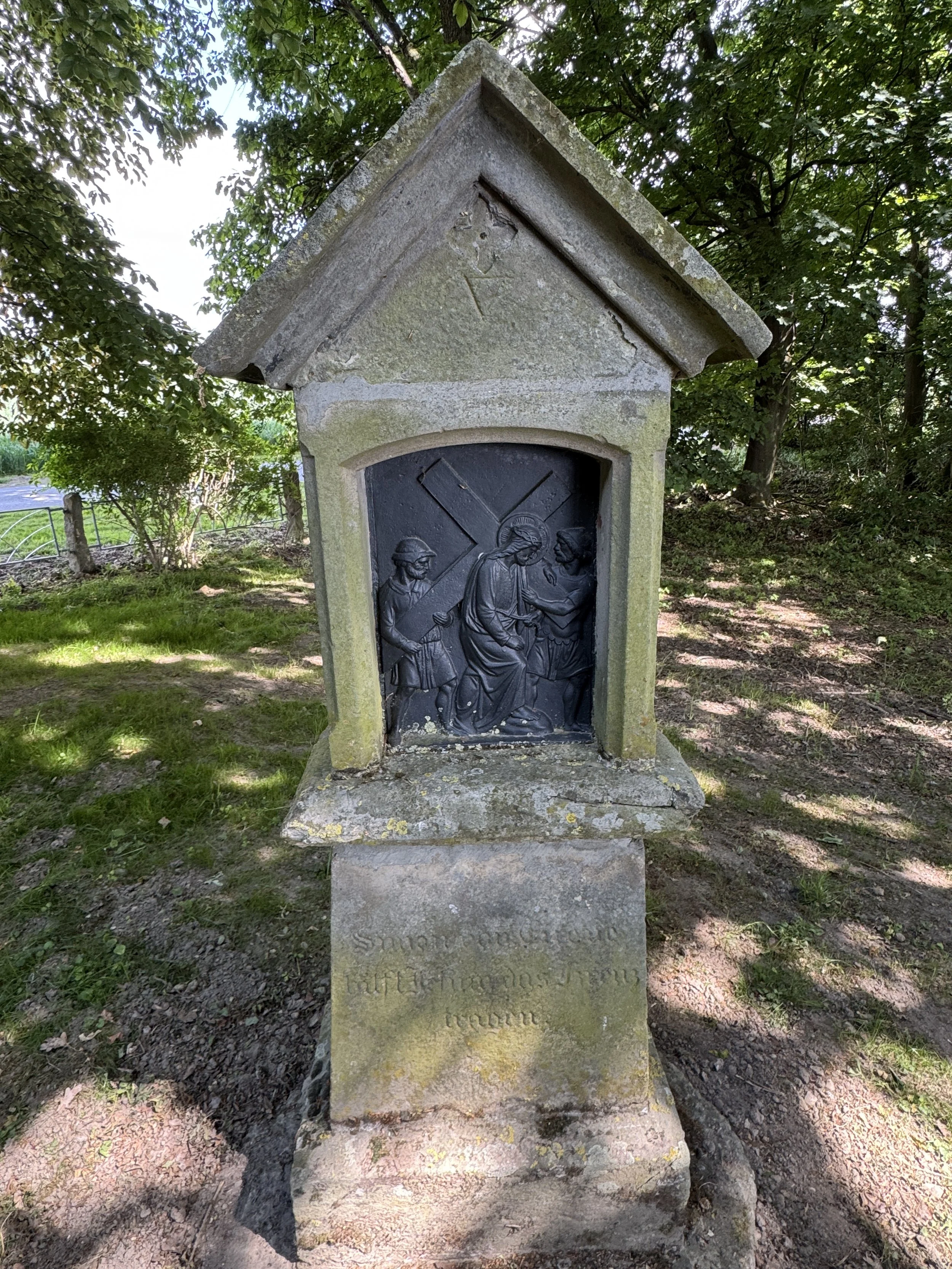
V - Simon of Cyrene helps Jesus carry the Cross
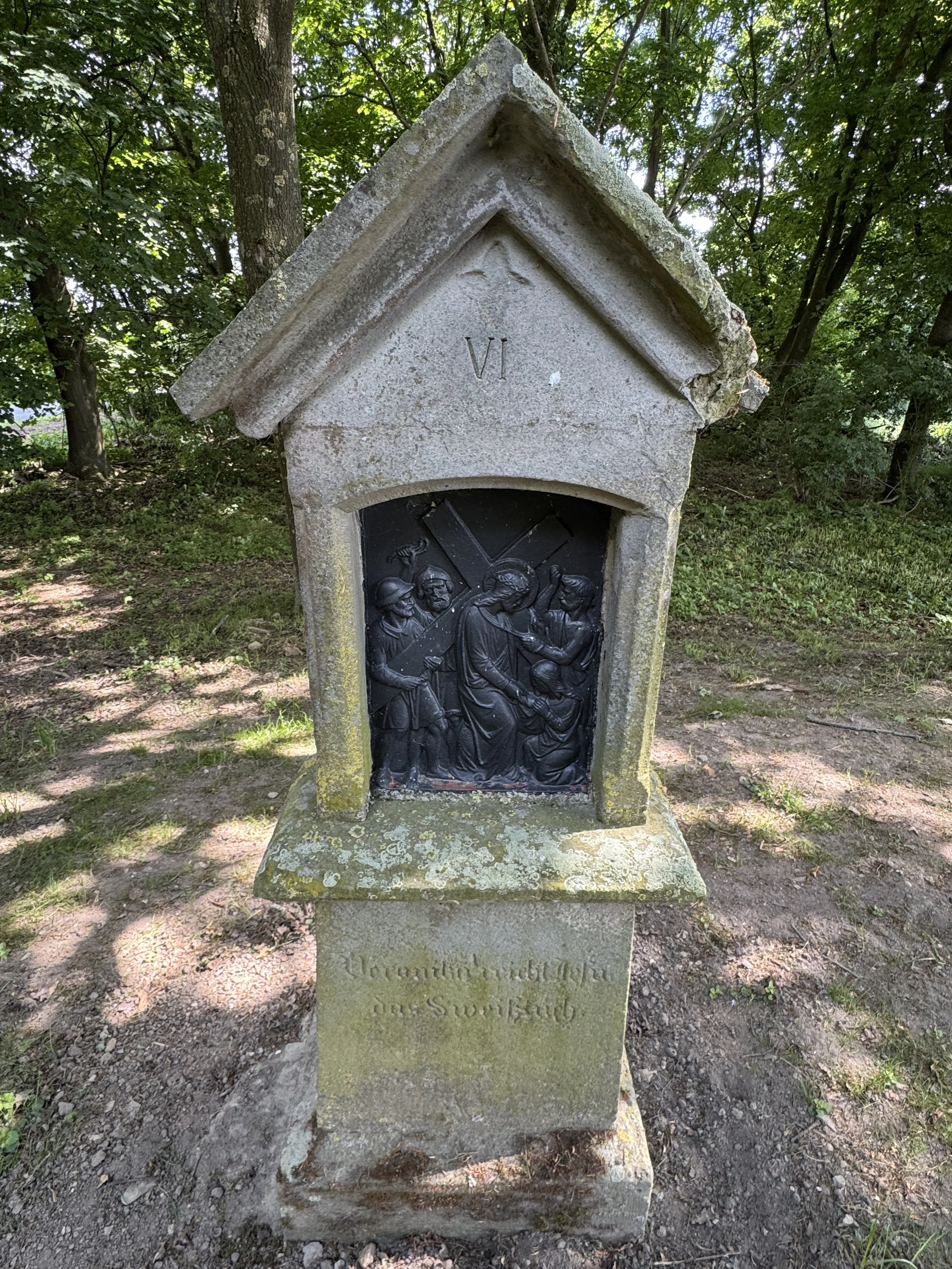
VI- Veronica wipes the face of Jesus
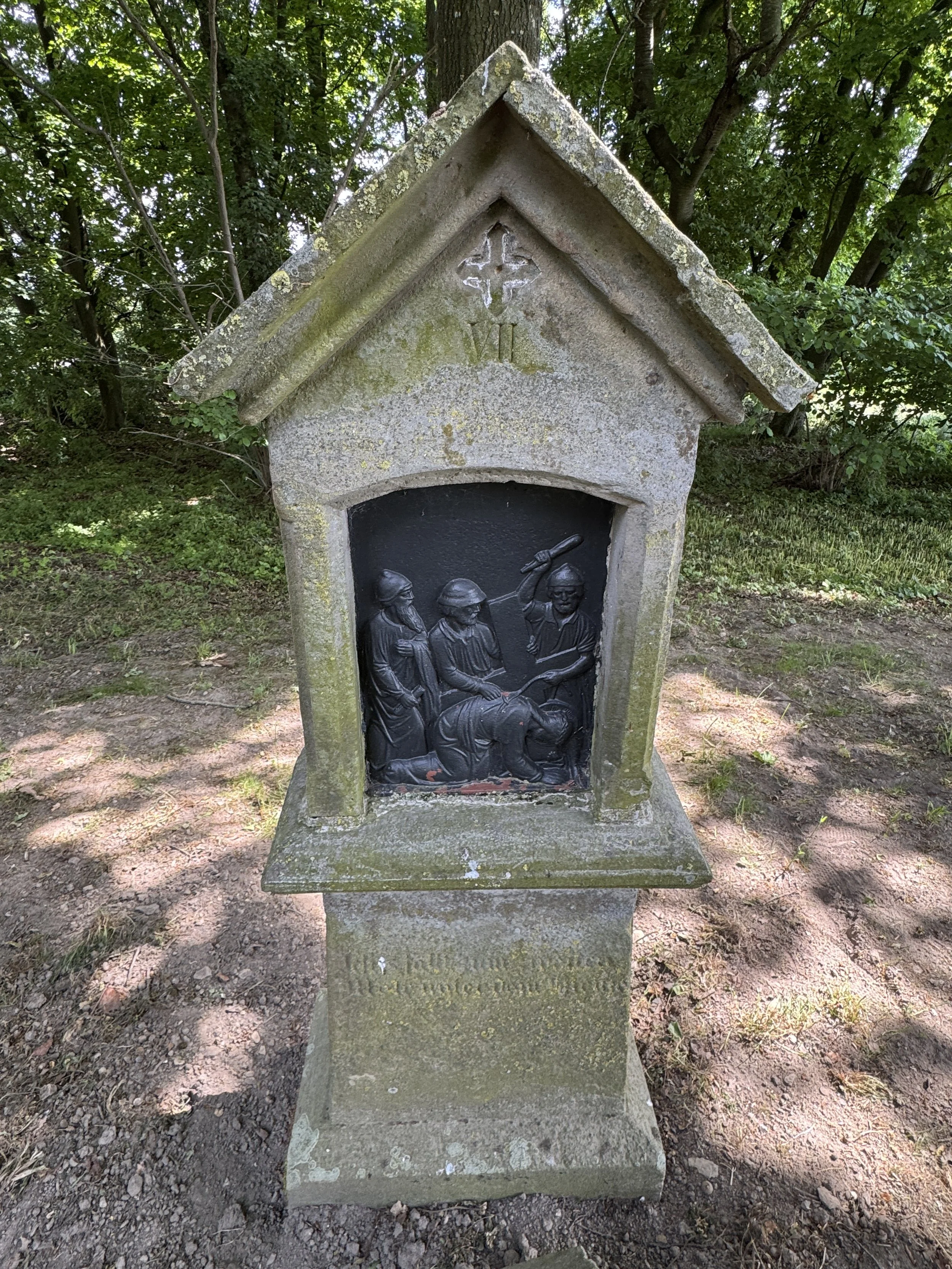
VII - Jesus falls for the second time
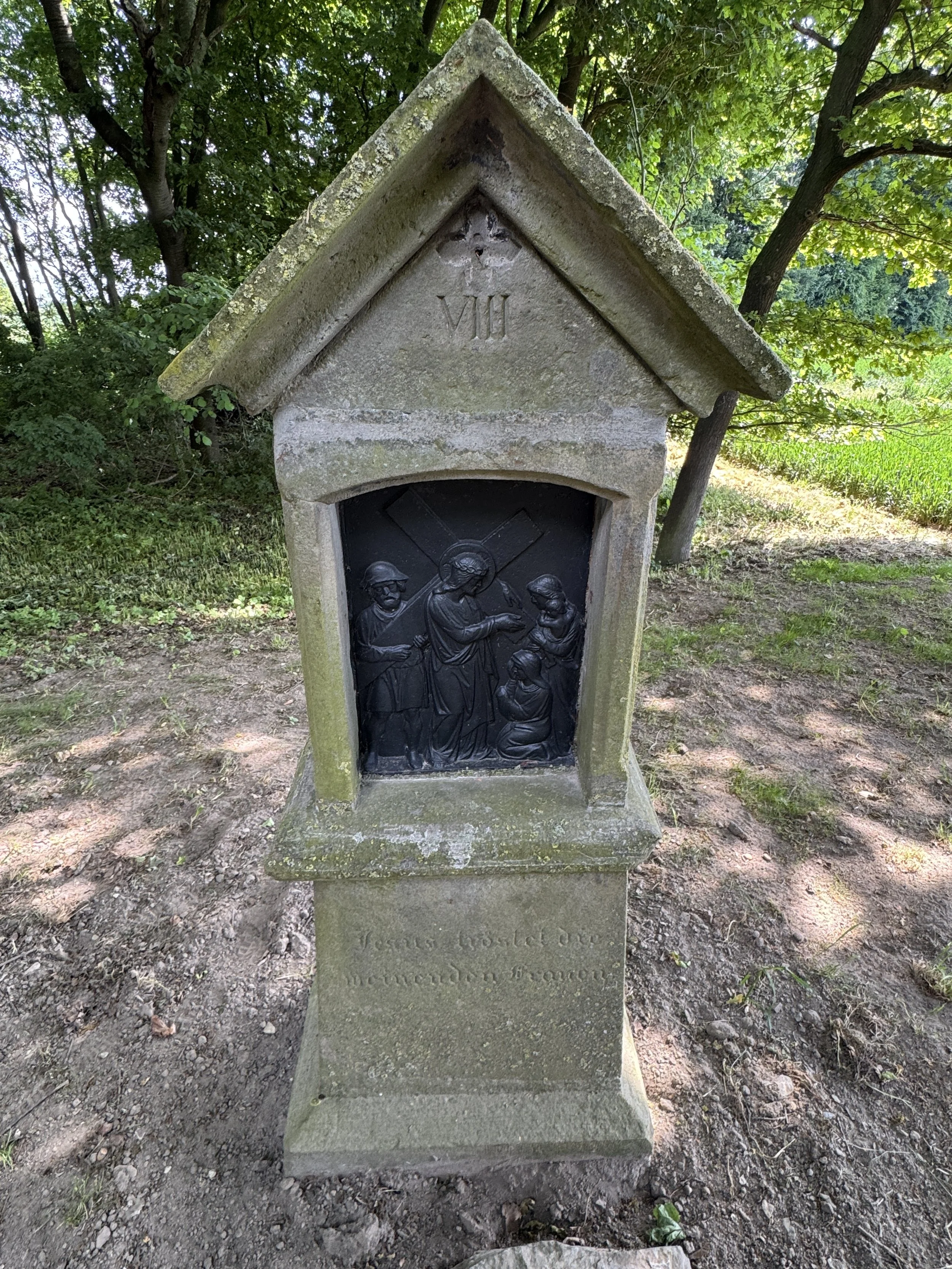
VIII - Jesus meets the women of Jerusalem

XII - Jesus dies on the Cross
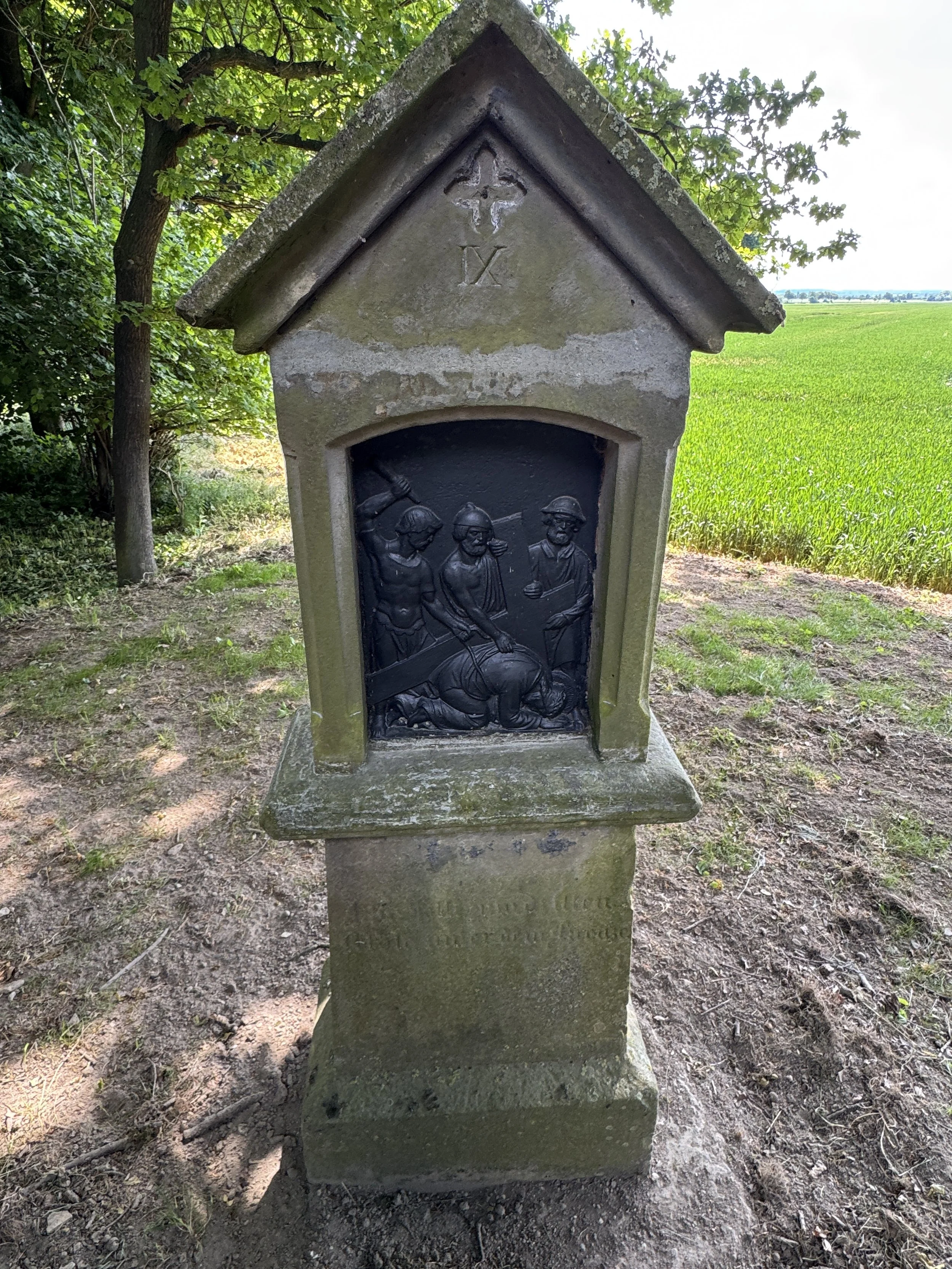
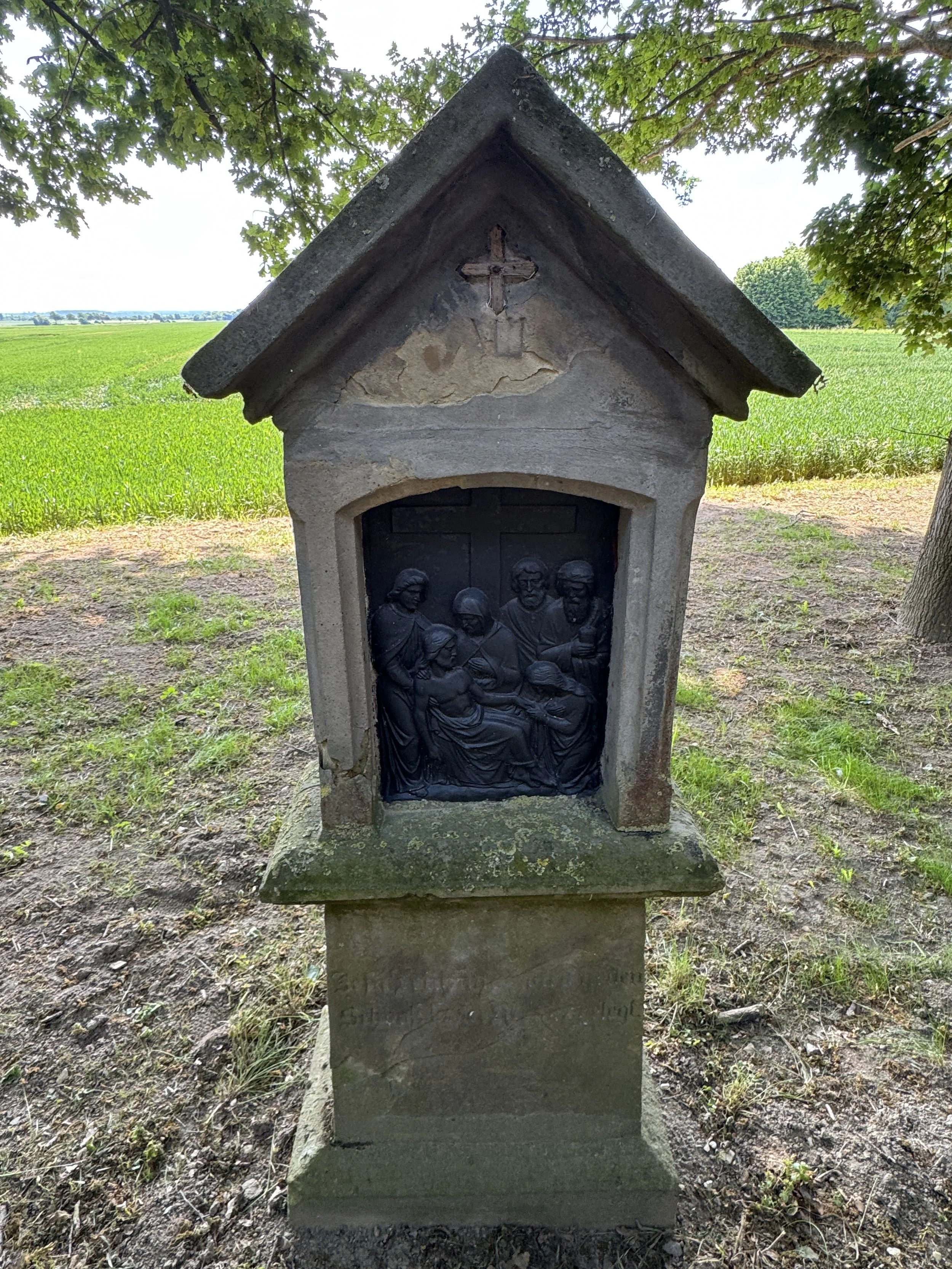
IV - Jesus falls for the third time
XIII - Jesus is taken down from the Cross
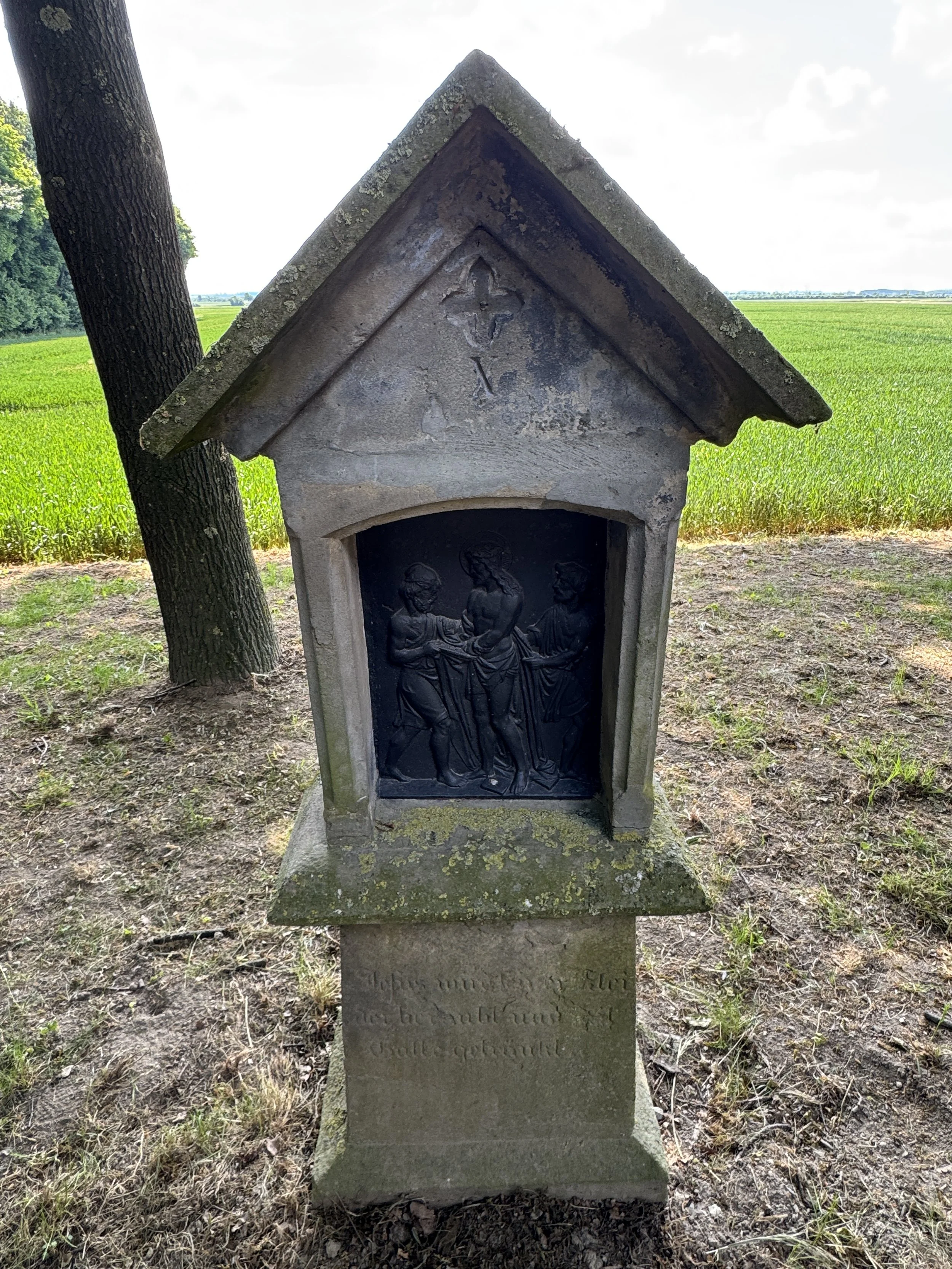
X - Jesus is stripped of his garments
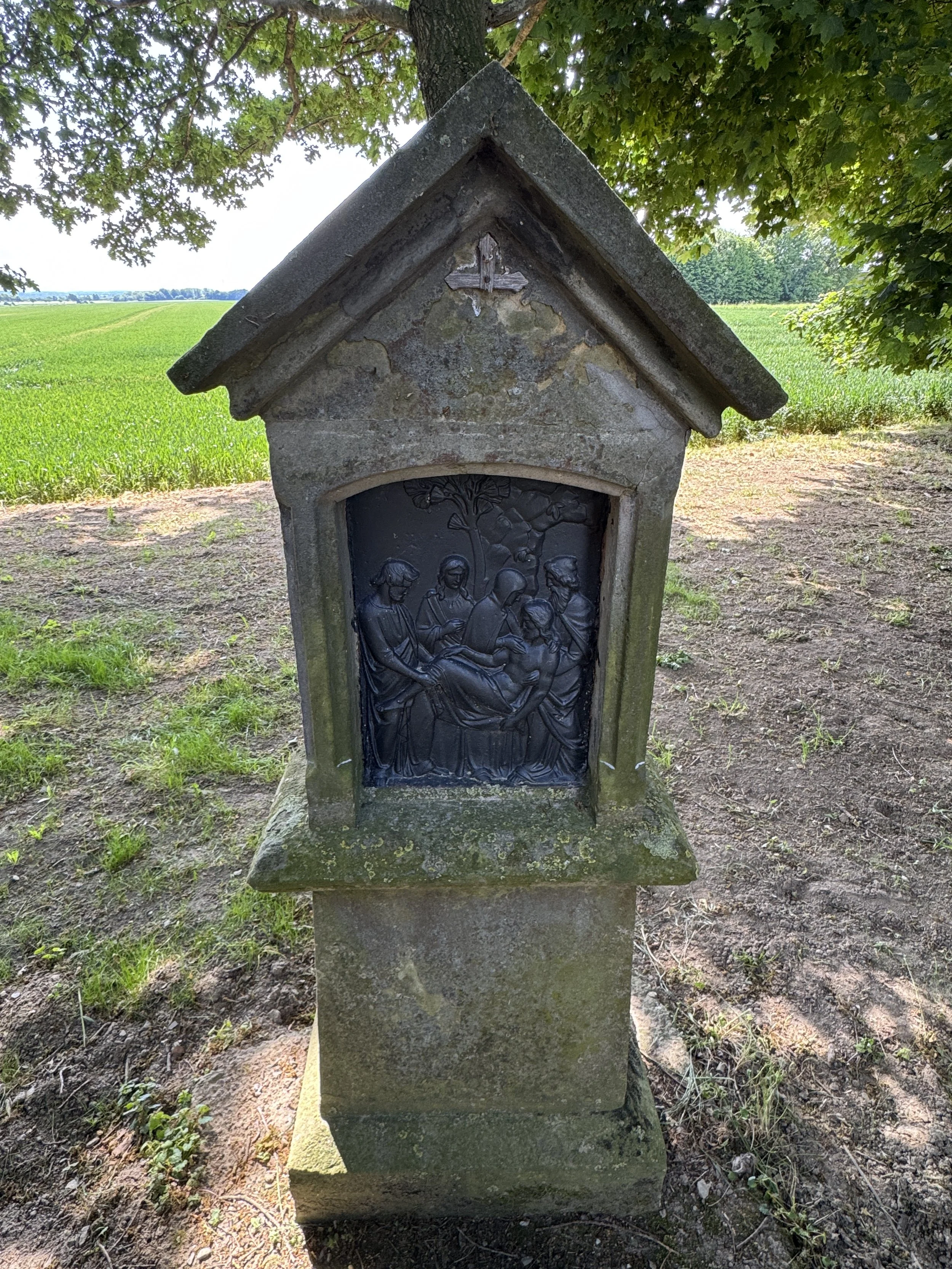
XIV - Jesus is laid in the tomb
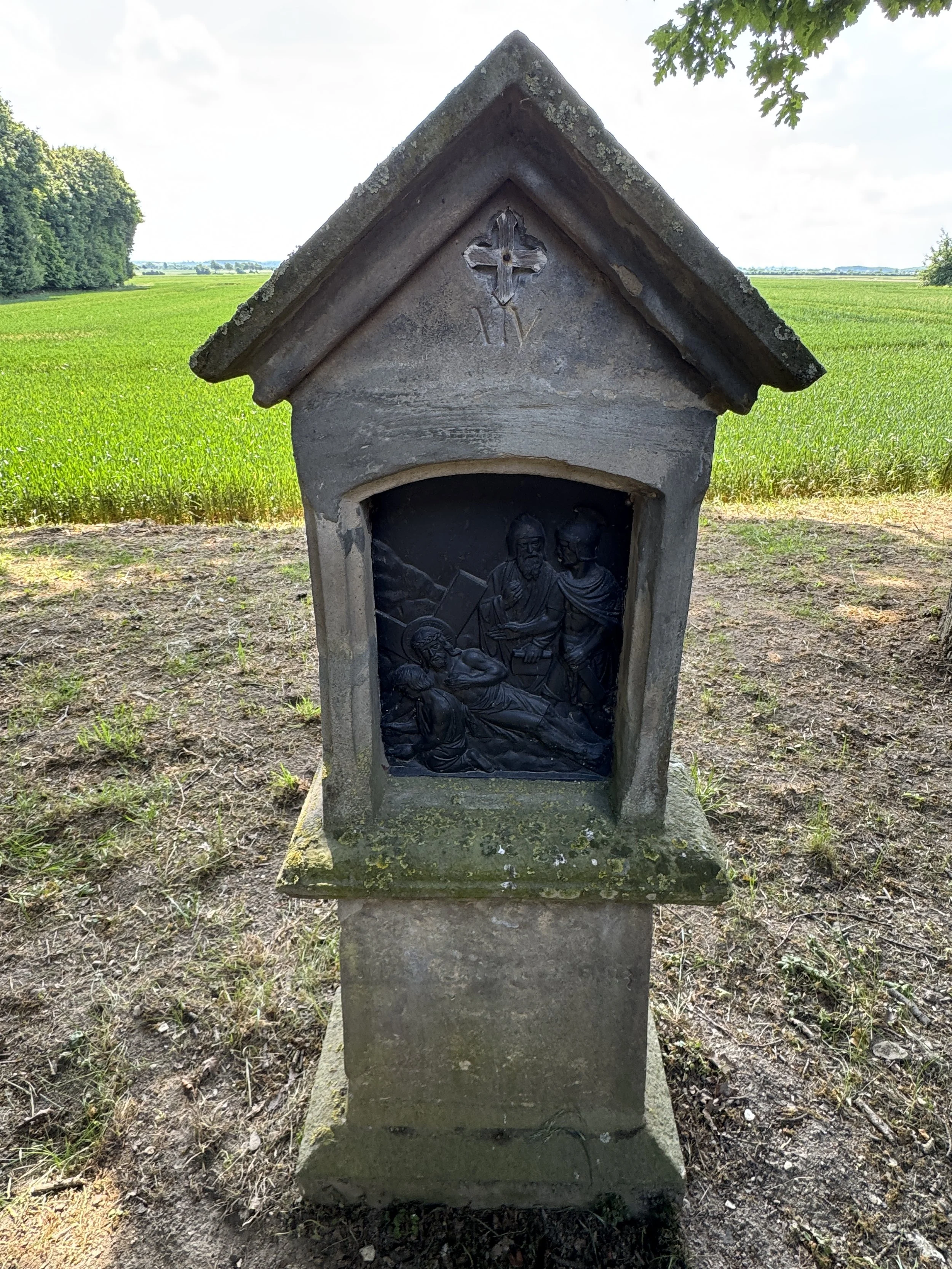
XI - Jesus is nailed to the Cross
Sources
1150 Jahre Schmerlecke 883-1983:
The Chapel On The Lusebrink Informational Sites
https://kapelle-schmerlecke.jimdofree.com
https://pr-geseke-erwitte.de
Pictures and video - Bryan Bales